Why is multi-stage filtration important for heavy-duty trucks? The answer begins with the road itself. Dust, soot, water, and microscopic metal particles enter harsh operating environments every day. A single filter may capture much of this contamination, but it can become overloaded quickly. Multi-stage filtration divides the work between pre-filters, fine filters, and water separators. Each stage protects the next one.
Heavy-duty filtration specialist Dr. Richard D. Taylor explains, “Effective filtration is not about stopping one contaminant; it is about controlling contamination throughout the system.” His point matters on construction sites, mining routes, and long-haul highways. A coarse pre-filter can trap larger dust particles before they reach the primary element. A finer stage then protects injectors, turbochargers, hydraulic valves, and engine bearings. Water separation adds another layer of defense, especially when fuel storage or weather conditions are uncertain.
The benefits are practical. Cleaner air supports efficient combustion. Cleaner fuel helps protect high-pressure injection components. Longer filter life can reduce service interruptions and maintenance costs. Still, filtration is not magic. Poor installation, incorrect filter ratings, or neglected service intervals can defeat a well-designed system. That uncomfortable detail deserves attention.
A technician may see the warning signs first: restricted airflow, rising fuel pressure, dark hydraulic oil, or an engine that feels unusually weak. Multi-stage filtration gives fleets more protection, but only when technicians inspect, measure, and replace components correctly. Real-world experience matters. The cleanest filter on paper may perform poorly under vibration, moisture, and heavy dust. That is where thoughtful system design becomes more valuable than a single impressive specification.
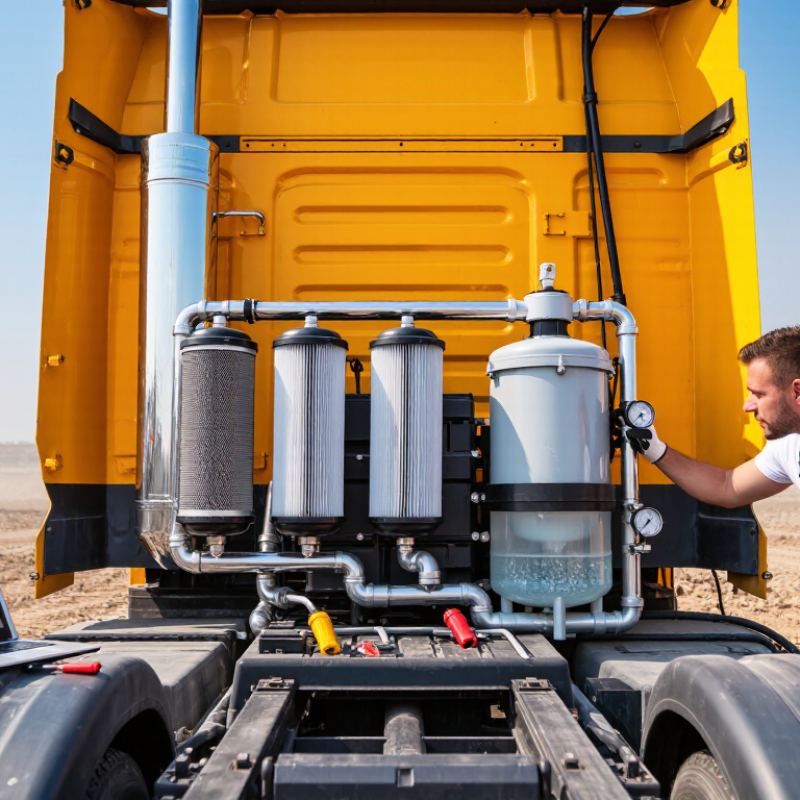
5 Tips Why Multi Stage Filtration Matters for Heavy Trucks
Understanding Multi-Stage Filtration in Heavy-Truck Systems
Multi-stage filtration protects heavy-truck systems by removing contamination in controlled steps. A coarse filter catches large particles before they damage pumps or injectors. A water separator removes moisture from fuel, which can cause corrosion and poor combustion. A finer element then captures smaller particles that remain. This layered process reduces the burden on each filter.
Real-world maintenance shows why the sequence matters. On dusty construction routes, air filters load quickly and restrict airflow. In cold weather, water in fuel may freeze and interrupt delivery. Hydraulic systems face similar risks when metal wear particles circulate through valves. Checking restriction indicators, drain points, and filter condition can reveal trouble early. Small details matter.
Filter selection should match the truck’s workload, fluid type, and service interval. A filter that works well on highways may struggle in mining conditions. Technicians should inspect seals, housing damage, and installation direction during every replacement. Clean handling is essential. One careless opening can introduce new debris. It is also worth recording pressure readings and contamination findings, not just changing elements by habit. No setup is perfect. Maintenance records can expose assumptions that seemed reasonable but were wrong. Properly staged filtration improves component life, supports consistent performance, and helps prevent expensive roadside failures.
Understanding Multi-Stage Filtration in Heavy-Truck Systems: practical filtration stages, typical engineering ranges, and operating benefits.
| Tip | Filtration Principle | Typical Stage Arrangement | Representative Data | Primary Benefit for Heavy Trucks | Maintenance and Monitoring Cue |
|---|---|---|---|---|---|
| 1 |
Remove large contaminants before fine filtration. A coarse first stage prevents larger particles and water droplets from rapidly loading downstream elements. |
Stage 1: Separation Fuel tank pickup screen, sediment bowl, water separator, or coarse pre-filter. |
Typical fuel pre-filtration range: 10–30 μm. Water separators are designed to remove free water; performance depends on flow rate, fuel condition, and separator design. |
Extends the service life of finer filters and reduces the risk of premature restriction in the fuel supply system. | Drain accumulated water where the system provides a drain valve. Inspect for sediment, corrosion, and abnormal water accumulation during scheduled service. |
| 2 |
Use a finer final stage to protect precision components. Modern high-pressure fuel equipment has tight internal clearances and requires cleaner fuel than a coarse screen can provide. |
Stage 2: Fine filtration Final fuel filter located upstream of the high-pressure pump and injectors. |
Common final fuel-filter ratings are approximately 2–5 μm, although the specified rating must follow the engine and fuel-system manufacturer’s requirements. | Helps limit abrasive wear, injector sticking, pump damage, and fuel-system performance loss caused by particulate contamination. | Replace the element when the service indicator reaches its limit, the specified differential pressure is exceeded, or the scheduled interval is reached. Do not compare micron ratings unless the test method is also known. |
| 3 |
Protect the engine oil circuit in more than one way. Different oil-filter locations address different contamination risks and flow requirements. |
Stage 1: Full-flow filter Protects the main lubrication circuit. Stage 2: Bypass or secondary filter Cleans a smaller portion of the oil continuously, where fitted. |
Full-flow engine-oil filters commonly use nominal ratings in the approximate range of 10–30 μm. Bypass filtration can target smaller particles, but its flow rate and installation requirements are system-specific. | Balances continuous lubrication flow with improved contaminant control, helping reduce abrasive wear in bearings, piston rings, and valve-train components. | Check oil pressure, oil condition, filter restriction, and oil-change results together. A filter should not be selected solely by the smallest advertised micron number. |
| 4 |
Stage air filtration to preserve airflow and engine efficiency. A pre-cleaner or outer element can capture larger dust before the finer safety element. |
Stage 1: Primary air cleaner Removes most incoming dust and debris. Stage 2: Safety element Provides secondary protection if the primary element is damaged or removed during service. |
Heavy-duty air cleaners are commonly evaluated by total dust-loading efficiency and restriction rather than by one universal micron rating. A typical maintenance target is to keep restriction within the engine maker’s specified limit; many systems use an indicator in the approximate 5–10 kPa range, but the correct limit is application-specific. | Reduces dust ingestion, cylinder and turbocharger wear, and excessive black smoke or power loss caused by restricted or damaged air filtration. | Use the restriction indicator or measured pressure drop. Avoid routine compressed-air cleaning of disposable paper elements because it can damage filter media and create leaks. |
| 5 |
Control restriction and service filters as a complete system. A filter that is too restrictive can reduce flow, while an overloaded filter can cause bypass operation or unfiltered flow depending on system design. |
System-wide monitoring Differential-pressure indicators, pressure sensors, bypass valves, scheduled inspections, and contamination checks. |
Differential pressure should be compared with the vehicle or component specification. In hydraulic systems, filter performance is often expressed using a Beta ratio; for example, β10 = 200 means approximately 200 particles of 10 μm or larger enter for every one particle passing through under the stated test conditions. | Prevents unnecessary filter changes, avoids flow starvation, and helps maintain stable fuel, oil, air, and hydraulic-system performance. | Record pressure drop, operating hours, contamination findings, and filter-change intervals. Investigate sudden restriction increases because they may indicate dust ingestion, fuel contamination, component wear, or water entry. |
Technical note: The numerical ranges above are representative engineering values, not universal replacement specifications. Actual filter ratings, pressure-drop limits, service intervals, and test methods vary by engine, fluid, operating environment, and vehicle configuration. Always verify the applicable service specification before selecting or replacing a filter.
Different layers capture different contaminants. Coarse media traps dust and rust, while finer media catches smaller particles. Small particles matter.
Clean filtration helps protect injectors, bearings, turbochargers, oil passages, and hydraulic valves. It also reduces contamination inside cylinders.
Dark pleats and reduced airflow often signal blockage. Rising restriction can increase fuel use and weaken engine response.
No. Poorly matched elements may restrict flow, especially during cold starts. More layers are not automatically better.
Consider engine requirements, operating conditions, service data, and measured pressure drop. A dusty quarry may require shorter service intervals.
Check seals, gaskets, housings, fittings, and exposed ports. Wipe the housing first. Dirt can enter quickly.
Yes. Media may be saturated or restricted internally. Appearance alone can mislead us.
Follow the equipment guidance, then adjust for dust, moisture, fuel quality, idle time, and seasonal conditions. A fixed interval is useful, not perfect.
Record replacement dates, restriction readings, water drainage, and unusual dust, mud, or metal. Records make judgment easier.
Some operators focus only on replacement cost and ignore downtime. I once trusted clean-looking media; that judgment was wrong.
Multi-stage filtration is essential for heavy-duty trucks because their engines and critical systems operate under intense loads, heat, dust, and vibration. Why is multi-stage filtration important for heavy-duty trucks? It removes contaminants in steps, allowing each filter layer to capture particles of different sizes before they reach sensitive components. This layered protection helps keep fuel, engine oil, hydraulic fluid, and intake air cleaner, reducing abrasive wear, clogging, corrosion, and lubrication problems. As a result, the engine can operate more efficiently, maintain stable performance, and deliver dependable power over demanding routes.
Effective filtration also supports lower maintenance costs and improved reliability by reducing contamination-related failures and extending component service life. However, the system can only perform well when filters are inspected and replaced according to operating conditions. Correct filter selection, timely servicing, leak checks, and attention to warning signs such as reduced power or increased fuel consumption are all important. With consistent maintenance, multi-stage filtration helps heavy trucks achieve better fuel economy, longer uptime, and safer, more predictable operation.

 Tolev Auto