How to source reliable custom automotive filters from China? The answer begins with more than a supplier directory or a low quotation. It requires practical research, technical understanding, and careful communication. A dependable filter manufacturer should explain media type, filtration efficiency, pressure-drop limits, sealing materials, and expected service life. These details matter when a filter must perform inside a dusty workshop, a cold warehouse, or a hot engine compartment.
Experienced buyers usually examine factory capability before discussing large orders. Request production photos, quality-control records, sample reports, and references from comparable automotive projects. Check whether the supplier makes filter media, assembles finished units, or depends heavily on subcontractors. An audit can reveal simple but important facts, such as clean storage areas, calibrated testing equipment, and labeled inspection stations. Do not rely on attractive catalogs alone.
Samples should be tested against the actual application, not merely approved by appearance. Compare dimensions, gasket compression, airflow, dust-holding capacity, and fitment consistency. Ask how the factory manages design changes and rejected batches. Small differences can create costly installation problems. Sometimes, a supplier’s answer remains incomplete. That is a warning, not a minor inconvenience.
A responsible sourcing process also verifies export experience, transparent documentation, and realistic production schedules. Independent inspections may add expense, but they can reduce uncertainty before shipment. No checklist is perfect. Still, disciplined verification helps buyers build a stable supply relationship, protect vehicle performance, and avoid decisions based only on price. Reliable sourcing is not a single purchase; it is an ongoing evaluation of evidence, communication, and results.
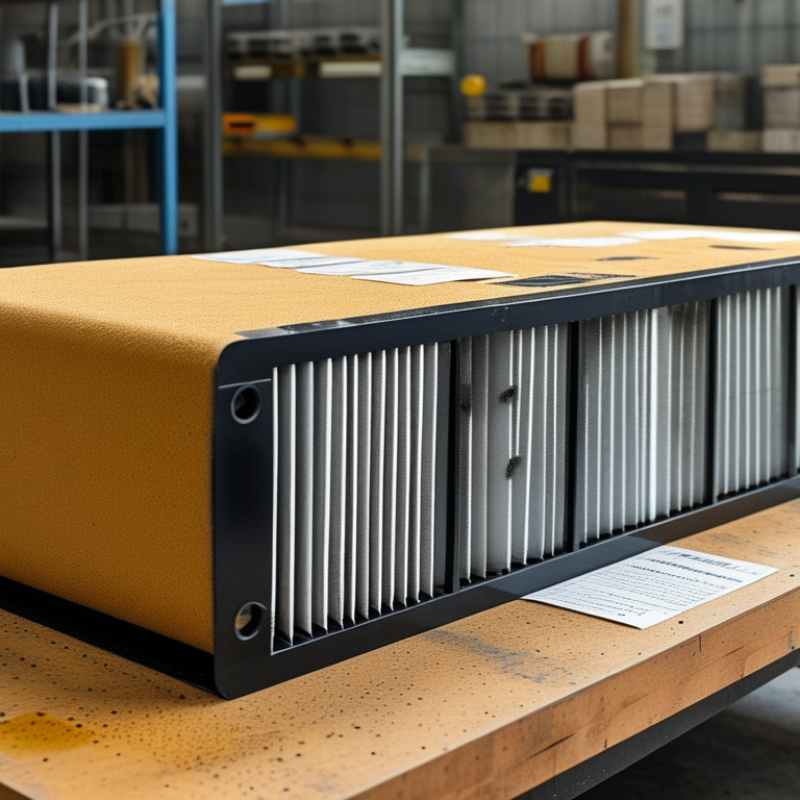
Reliable custom automotive filters begin with a precise requirement sheet. Record the vehicle model, engine type, installation space, and expected service interval. Add the filter’s length, diameter, sealing method, and connection details. Small dimensional errors can cause leakage or difficult installation.
Define the filtration target clearly. State the required efficiency, airflow, pressure drop, operating temperature, and dust-loading conditions. Identify the media type, adhesive requirements, gasket material, and moisture resistance. Ask suppliers for test methods, inspection records, material certificates, and sample traceability. A professional supplier should explain how each result was measured, not simply provide attractive numbers. Your first specification may be imperfect. That is normal. Test samples in realistic conditions, then revise the document before mass production. Field feedback can reveal problems that laboratory tests miss.
Tips: Measure the original filter twice. Photograph its sealing surfaces and mounting points. Share a marked drawing with tolerances. Request several samples before approval. Compare airflow, fit, noise, and visible damage after testing. Keep one approved sample as a reference standard. Avoid vague terms such as “high quality” or “heavy duty.” Replace them with measurable requirements. Also confirm packaging, batch identification, and replacement labeling early. These details seem minor, but they often affect warehouse handling and customer confidence.
When sourcing custom automotive filters from China, certification should be checked before price. The 2024 MarketsandMarkets Automotive Filters report estimates the global market will grow from about USD 10.2 billion in 2024 to USD 13.3 billion by 2029. This growth attracts capable factories, but also inexperienced suppliers. Request current ISO 9001 certificates, manufacturing addresses, and certification scope. For safety-related components, IATF 16949 approval is a stronger signal of automotive process control. ISO 14001 can also indicate structured environmental management.
Look beyond certificates. Ask for recent audit records, production flowcharts, and material traceability from media roll to finished filter. A reliable factory should provide pressure-drop, dust-holding, burst-strength, and leak-test results for your exact design. Compare test methods, airflow rates, and sample quantities. A report using different conditions may look impressive but prove little. The ISO Survey 2023 recorded more than 1.4 million ISO 9001 certificates worldwide, so ISO 9001 alone cannot identify a specialist filter manufacturer.
Visit the plant, physically or through a controlled video audit. Check pleat consistency, adhesive curing, clean storage, and barcode records. Review process capability data, preferably Cpk results from repeated production batches. Require a pre-production sample, dimensional inspection, and a documented change-control process. Certification is evidence, not proof. I have seen well-presented samples hide unstable glue application during longer runs. That risk deserves attention. A small pilot order, independent laboratory testing, and clear acceptance limits can reveal weaknesses before full-scale purchasing.
| Evaluation Dimension | Filter Category | Relevant Standard or Requirement | Evidence to Request | Practical Acceptance Criteria | Risk Signals | Priority |
|---|---|---|---|---|---|---|
| Quality Management System | All automotive filters | ISO 9001:2015; IATF 16949 is highly relevant for suppliers serving automotive production programs | Valid certificate, certification scope, issuing certification body, site address, expiry date, and latest surveillance records | The certificate covers the actual manufacturing site and the processes used for the requested filter products | Certificate belongs to a trading office, covers a different site, has expired, or does not identify the certified scope | Required |
| Factory Capability | All custom filter programs | Documented production, inspection, calibration, traceability, corrective-action, and change-control processes | Factory audit report, process flow chart, equipment list, organization chart, capacity plan, and sample production records | The supplier can produce the specified dimensions, media, seals, adhesives, pleat geometry, packaging, and annual volume without uncontrolled outsourcing | Unclear production location, inconsistent process descriptions, or dependence on undisclosed subcontractors | Required |
| Automotive Air-Filter Performance | Engine air filters | ISO 5011 for initial filtration efficiency, pressure loss, dust-loading performance, and test procedures | Full laboratory report showing test dust, airflow, pressure-drop curve, filtration efficiency, dust capacity, sample identification, and test conditions | Results meet the buyer's approved engineering specification at the required airflow and remain consistent across production samples | Only a generic efficiency percentage is supplied without airflow, test method, dust type, pressure loss, or sample traceability | Required |
| Cabin-Air Filter Performance | Particle and particulate cabin filters | ISO 11155-1 for automotive air filters used in the passenger compartment; ISO 16890 may be used for relevant air-filter efficiency classification where applicable | Independent or controlled laboratory results for pressure drop, particle removal, dust loading, and test aerosol or particle-size conditions | Performance is stated by particle-size range and airflow rather than by an unsupported single efficiency figure | Marketing claims such as “99.9% filtration” without particle size, airflow, pressure drop, or test conditions | Required |
| Oil-Filter Performance | Spin-on and cartridge oil filters | Buyer-approved tests based on application requirements; ISO 4548 series is commonly used for full-flow oil-filter testing | Test data for filtration efficiency, pressure loss, contaminant holding capacity, burst pressure, anti-drainback performance, bypass-valve operation, and leakage | All results are tested with the specified oil viscosity, temperature, flow rate, pressure, gasket, valve setting, and service interval | Tests use unspecified oil or conditions, or the supplier cannot provide valve and burst-pressure data | Required |
| Fuel-Filter Performance | Gasoline and diesel fuel filters | Application-specific fuel compatibility, pressure, flow, water separation, and particle-removal requirements | Fuel compatibility report, filtration-efficiency data, pressure-drop curve, water-separation results where applicable, burst and vibration tests | Tests use the correct fuel type, temperature range, pressure, flow rate, and target contaminant levels for the vehicle application | No distinction between gasoline and diesel applications, or no evidence of seal and media compatibility with the specified fuel | Required |
| Structural and Environmental Durability | Filters with metal or plastic housings | Customer specification and applicable vehicle-level requirements for vibration, temperature, humidity, corrosion, pressure, and leakage | Validation plan, dimensional report, vibration results, thermal-cycle results, humidity exposure, corrosion results, and post-test inspection records | No cracking, delamination, media collapse, seal leakage, deformation, or unacceptable performance loss after the agreed validation sequence | Only visual inspection is performed; durability testing is unavailable or performed on a non-equivalent sample | Required |
| Material Compliance | All filters and packaging materials | REACH substance restrictions and SVHC communication requirements; RoHS where the product or supplied components fall within its scope or the buyer requires it | Material declaration, supplier declarations, laboratory screening where required, safety data sheets for chemical substances, and updated compliance statements | Declarations identify media, resin, rubber, coating, adhesive, metal treatment, ink, and packaging materials used in the supplied configuration | Blanket compliance statement with no material list, no revision date, or no process for updating declarations after material changes | Required |
| Product Traceability | All production batches | Documented lot control and retained production records | Lot-code format, raw-material batch records, inspection reports, operator or line identification, shipment records, and retention period | Every shipment can be traced back to raw materials, production date, tooling, inspection results, and responsible production line | Samples and bulk goods use different markings, or the supplier cannot trace material and inspection history | Required |
| Dimensional and Fit Control | Custom-fit filters and sealing interfaces | Approved drawing, GD&T or dimensional specification, control plan, and first-article approval process | First-article inspection report, gauge calibration records, dimensional capability data, drawings with revision control, and fit-check samples | Critical dimensions, seal compression, locating features, thread size, flange geometry, and orientation meet the approved drawing revision | Supplier accepts an image or sample without controlled drawings, revision numbers, or defined critical characteristics | Required |
| Independent Testing | Performance and compliance claims | Testing should follow the stated standard and use a competent laboratory; ISO/IEC 17025 accreditation is a strong indicator for laboratory competence | Complete test report, laboratory accreditation scope, test date, sample code, calibration status, raw data, and photographs where relevant | The laboratory scope covers the actual test method, and the tested sample is identical to the production configuration | Certificate-only documents, incomplete reports, unverifiable laboratories, or reports with no sample and method identification | Recommended |
| Production Part Approval | Automotive OEM and Tier-program supply | PPAP or an equivalent customer-specific approval package; AIAG PPAP is widely used in automotive supply chains | Part submission warrant, process flow, PFMEA, control plan, measurement results, material certificates, capability studies, and approved samples | Approval is completed before mass production, and all deviations are documented and authorized in writing | Supplier treats a successful prototype sample as automatic approval for production | Recommended |
| Process Capability | Critical dimensions and performance characteristics | Statistical process control and capability analysis based on buyer-defined critical characteristics | Control charts, measurement-system analysis, capability studies, inspection frequency, and reaction plans | Capability targets are agreed before production; a common benchmark is Cpk ≥ 1.33 for stable critical characteristics unless the customer specifies another value | Capability indices are reported without sample size, distribution check, measurement-system validation, or reaction plan | Recommended |
| Change Management | Materials, tooling, process, site, and subcontractor changes | Formal engineering-change notification and customer-approval procedure | Change-control procedure, notification lead time, revalidation plan, revision history, and list of approved subcontractors | No change affecting fit, form, function, compliance, or durability is implemented before documented review and approval | Supplier reserves the right to change media, adhesive, seal material, tooling, or production site without notice | Required |
| Incoming and Final Inspection | All filter assemblies | Inspection plan linked to drawings, specifications, and control-plan characteristics | Incoming inspection records, in-process checks, final inspection reports, sampling plan, nonconformance records, and calibrated equipment list | Inspection covers dimensions, appearance, media placement, sealing, labels, packaging, and application-specific performance characteristics | Inspection is limited to appearance and quantity, with no documented acceptance limits or equipment calibration | Required |
| Packaging and Logistics | Filters vulnerable to deformation, moisture, or contamination | Customer packaging specification and agreed shipping, storage, and shelf-life conditions | Packaging drawing, drop or compression test where required, moisture protection method, pallet configuration, carton labels, and storage instructions | Packaging prevents pleat deformation, seal damage, contamination, water exposure, and label loss throughout the agreed logistics cycle | Loose loading, insufficient separators, unsealed moisture-sensitive packaging, or missing lot and date information | Recommended |
| Supplier Audit and Corrective Action | Shortlisted manufacturers | Risk-based supplier audit using ISO 9001 or IATF 16949 process principles | Audit checklist, findings, root-cause analysis, containment action, corrective-action plan, effectiveness evidence, and closure dates | Major findings have documented containment and verified corrective action before production release | Repeated findings, late corrective actions, copied evidence, or refusal to permit a production-site audit | Required |
| Certification Verification | Management-system and compliance certificates | Verification through the certification body's public directory or written confirmation from the issuing body | Certificate number, legal entity, site address, scope, issue date, expiry date, and verification record | Certificate details match the contracting manufacturer and the facility producing the ordered filters | Low-resolution certificate, inconsistent legal names, unverifiable certificate number, or mismatch between factory and certificate site | Required |
| Commercial Reliability | Custom tooling and recurring supply | Written terms for tooling ownership, intellectual property, warranty, nonconforming goods, inspection rights, and lead times | Signed quotation, technical agreement, quality agreement, tooling register, warranty terms, and escalation contacts | Responsibilities, ownership, tolerance limits, replacement or credit procedure, and change-notification obligations are unambiguous | Only informal messaging is used; tooling ownership and nonconformance remedies are not documented | Required |
| Pilot-Run Validation | New custom filter designs | Approved prototype, pilot-run, and production-validation plan | Pilot-run report, sample measurement results, performance test results, packaging approval, yield data, and customer sign-off | Production-equivalent samples pass fit, function, appearance, packaging, and agreed performance tests before volume release | Prototype made by a development team is presented as evidence of stable mass-production capability | Required |
| Evidence Freshness | All certificates and test reports | Current documents tied to the latest product revision and manufacturing process | Document revision, test date, sample date, certificate validity, equipment calibration date, and confirmation of unchanged materials or processes | Evidence is current, traceable, and representative of the exact configuration being quoted | Old reports are reused after changes to media, adhesive, seal, housing, tooling, production site, or process conditions | Required |
A reliable custom automotive filter starts with material verification, not a polished catalog.
Request the exact media grade, fiber composition, adhesive type, seal material, and wire specification. Check certificates against production batches. ISO 5011 provides recognized testing methods for intake air-cleaner performance, including pressure loss, efficiency, and dust-loading capacity. A filter can look dense and still perform poorly.
Design review should match the vehicle’s airflow, temperature range, service interval, and installation space. Ask for drawings with tolerances, pleat height, gasket compression, and bypass-valve settings.
One 2024 automotive filtration market report projects steady growth through the decade, increasing pressure for cheaper, faster sourcing. That pressure can weaken validation. It should not replace it.
Use prototype testing, dimensional inspection, and leak checks before approving mass production.
Production capability needs evidence beyond monthly output claims. Review incoming-material controls, mold maintenance, calibration records, traceability, and corrective-action history. IATF 16949-based processes are useful indicators, but a certificate alone proves little.
Conduct a remote or on-site audit, then compare pilot-run results with the approved sample. Keep retained samples from each lot. Small details matter.
A slightly warped frame may create an unmeasured air path. Even experienced buyers sometimes trust a complete document package too quickly; independent laboratory testing remains wise when test data looks unusually perfect.
Reliable custom automotive filters require more than attractive samples. The China Association of Automobile Manufacturers reported 31.28 million vehicles produced in China during 2024. That scale creates opportunities, but also uneven supplier capability. Request three production samples from the same batch. Check pleat spacing, gasket recovery, frame bonding, and media weight. A filter can look perfect and still fail under pressure.
Testing data should match the filter’s application. Air intake filters need dust-loading and pressure-drop results under ISO 5011 conditions. Oil filters should include filtration efficiency, burst pressure, and fatigue results, referencing ISO 4548 methods. Cabin filters need airflow and particle-removal data, with test conditions clearly stated. Ask for raw curves, sample numbers, laboratory details, and test dates. A polished certificate is not enough.
I would distrust results without traceable sample identification.
Quality systems reveal daily discipline. Verify ISO 9001 certification, and prefer automotive suppliers using IATF 16949 practices, process control plans, and measurement-system analysis. Review incoming-media inspection records and final leak tests. During a factory visit, observe how operators control adhesive temperature and pleat height. Small variations matter. A 2024 industry quality report from the American Society for Quality found that many manufacturers still struggle to connect inspection data with corrective action. That weakness deserves direct questioning. Even experienced buyers sometimes approve samples too quickly. My own review process now keeps one sealed reference sample for every approved design.
How to Source Reliable Custom Automotive Filters from China?
Pricing must be tied to measurable specifications. Define media efficiency, pressure drop, dimensions, sealing materials, and inspection limits before requesting quotes. The World Bank’s 2023 Logistics Performance Index scored China at 3.7 out of 5, yet logistics quality still varies between regions and factories. Compare total landed cost, not only the unit price. Include tooling, testing, packaging, customs clearance, and possible rework.
Use a contract with approved drawings, material tolerances, sampling rules, and change-control procedures. A vague quality clause creates expensive arguments later. Require batch traceability and retain samples for every shipment. I would also add a remedy timeline, although enforcing it across borders can be slower than expected. That risk deserves honest planning.
Shipping needs practical controls. UNCTAD reports that maritime transport carries over 80% of global merchandise trade by volume, so port delays can affect production schedules quickly. Confirm Incoterms, carton strength, moisture protection, booking deadlines, and insurance responsibilities. Keep safety stock for critical filter models. Then audit the supplier at least annually, with additional checks after equipment, material, or process changes. Review calibration records, incoming inspection, production cleanliness, leak testing, and corrective-action closure. A remote audit is useful, but it cannot reveal every shop-floor problem. Pair documents with an independent pre-shipment inspection and random lot testing.
Practical sourcing benchmarks for managing pricing, contracts, shipping performance, and ongoing supplier audits. The figures are planning benchmarks and should be validated against product specifications, order history, and supplier records.
A reliable sourcing program typically targets landed-cost variance below 5%, contract coverage at 100%, on-time shipment performance above 95%, and closure of critical audit findings within 30 days.
: Request the exact filter media, fiber composition, adhesive, seal material, and wire specification. Check certificates against actual production batches. Small gaps matter. A dense-looking filter can still perform poorly.
Review airflow, temperature range, service interval, and available installation space. Request drawings showing dimensions, tolerances, pleat height, gasket compression, and bypass settings. Do not guess.
Test pressure loss, filtration efficiency, dust capacity, dimensions, and leakage. Inspect the frame and sealing surfaces carefully. A slightly warped frame can create an invisible air path. Perfect results deserve another review.
Review incoming-material controls, mold maintenance, calibration records, traceability, and corrective actions. Compare pilot-run results with the approved sample. Keep retained samples from every production lot.
No. A certificate can support confidence, but it does not prove daily process control. Use remote or on-site audits when practical. Independent laboratory testing is wise when data looks unusually perfect.
Compare total landed cost, not only the unit price. Include tooling, testing, packaging, customs clearance, shipping, insurance, and possible rework. A cheap quote may become expensive later.
Include approved drawings, material tolerances, sampling rules, and change-control procedures. Require batch traceability and retained samples for every shipment. Add a remedy timeline, but plan for slower cross-border enforcement.
Confirm delivery terms, carton strength, moisture protection, booking deadlines, and insurance responsibilities. Keep safety stock for critical filter models. Audit the supplier annually and after major process changes. Remote audits help, but they miss some shop-floor problems.
How to source reliable custom automotive filters from China? Start by defining your filtration requirements, including vehicle application, dimensions, media type, pressure range, service life, and performance targets. Clear technical specifications help potential suppliers understand your needs and provide accurate quotations. Next, evaluate manufacturers based on production experience, relevant certifications, engineering capabilities, and quality management practices. Verify their material sources, design standards, testing equipment, production capacity, and ability to support customized tooling or packaging.
Before placing a large order, review samples and request complete testing data that confirms filtration efficiency, durability, sealing performance, and resistance to operating conditions. Assess the supplier’s incoming inspection, in-process controls, final inspection, and traceability systems. Finally, compare pricing based on total cost rather than unit price alone, and establish clear contracts covering specifications, tolerances, quality responsibilities, delivery schedules, payment terms, and corrective actions. Reliable shipping arrangements, regular communication, and ongoing supplier audits can help maintain consistent quality and build a stable long-term partnership.

Tolev Auto